Leadership teams are rarely short of talent. They are often short of alignment. Individually strong executives can still form a group that stalls decisions, protects functional territory and sends mixed signals to the organisation below. Because the symptoms look like “normal business friction,” they are easy to tolerate for years.
This guide lists seven signs that your senior group needs dedicated team building for leadership teams, explains what that work looks like at executive level, and shows how Rush-A-Way combines workshops for leadership teams with experiential challenges for groups across the UAE and KSA.
Table of Contents
ToggleWhy the Leadership Team Sets the Ceiling
Leaders set the ceiling for what teams can achieve. How the executive group communicates, disagrees and decides becomes the template every department copies. A leadership team that avoids conflict produces an organisation that escalates instead of resolving. A leadership team that decides slowly produces an organisation that waits.
That is why leadership team building is not a perk. It is a lever on organisational performance. The goal is decision-making clarity, trust and alignment at the top, with a leadership team that models the culture you want across the business.
The 7 Signs Your Leadership Team Needs Team Building
1. Decisions get revisited after the meeting
Agreement in the room, then side conversations, then the same decision back on the agenda next month. This usually means people did not feel safe disagreeing openly, so they disagree later.
2. Alignment exists on slides but not in behaviour
Everyone can recite the strategy, yet functions pursue conflicting priorities. The executive group has agreed the words but not the trade-offs.
3. Function heads defend silos
Leaders speak for their department rather than for the business. Cross-functional friction at the top cascades into duplicated work and escalations below.
4. The team has changed but never reset
A new CEO, a merger, a succession or several new joiners. The team has new members but still runs on old, unspoken rules about who decides what.
5. Peer feedback does not happen
Leaders give feedback downward but not to each other. Problems between executives are routed through the CEO instead of being solved directly.
6. Meetings are reporting sessions, not decision forums
Most of the time is spent updating, very little is spent debating. The group has lost the habit of solving problems together.
7. Change programmes stall below the top
Initiatives launch with energy and fade at middle-management level. Often the root cause is mixed signals from a leadership group that is not fully aligned. Our guide to team transformation explains how to diagnose and fix this across the wider team.
If three or more of these sound familiar, your leadership group will likely benefit from a structured intervention rather than another dinner or offsite with no agenda.
What Leadership Team Building Looks Like in Practice
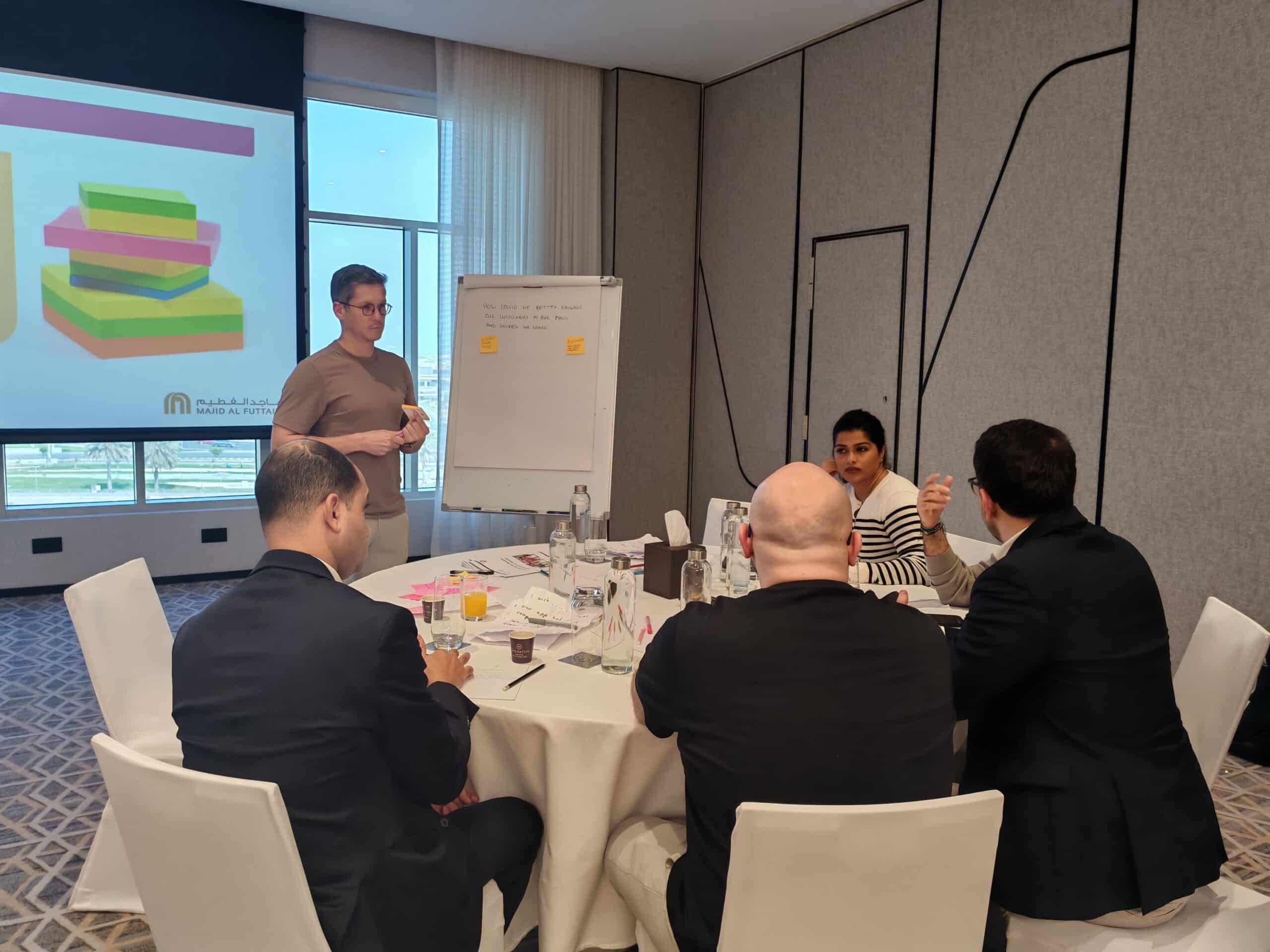
Executive groups need a different design from company-wide events. Rush-A-Way’s team building for leadership teams programmes are built around:
- Senior-level facilitation – facilitators experienced with C-suite dynamics, confidentiality and peer-level feedback.
- A pre-engagement briefing call to understand the leadership team’s context and objectives.
- A fully customised challenge flow aligned to stated behavioural outcomes, such as strategy alignment, post-merger integration, succession or cross-functional friction.
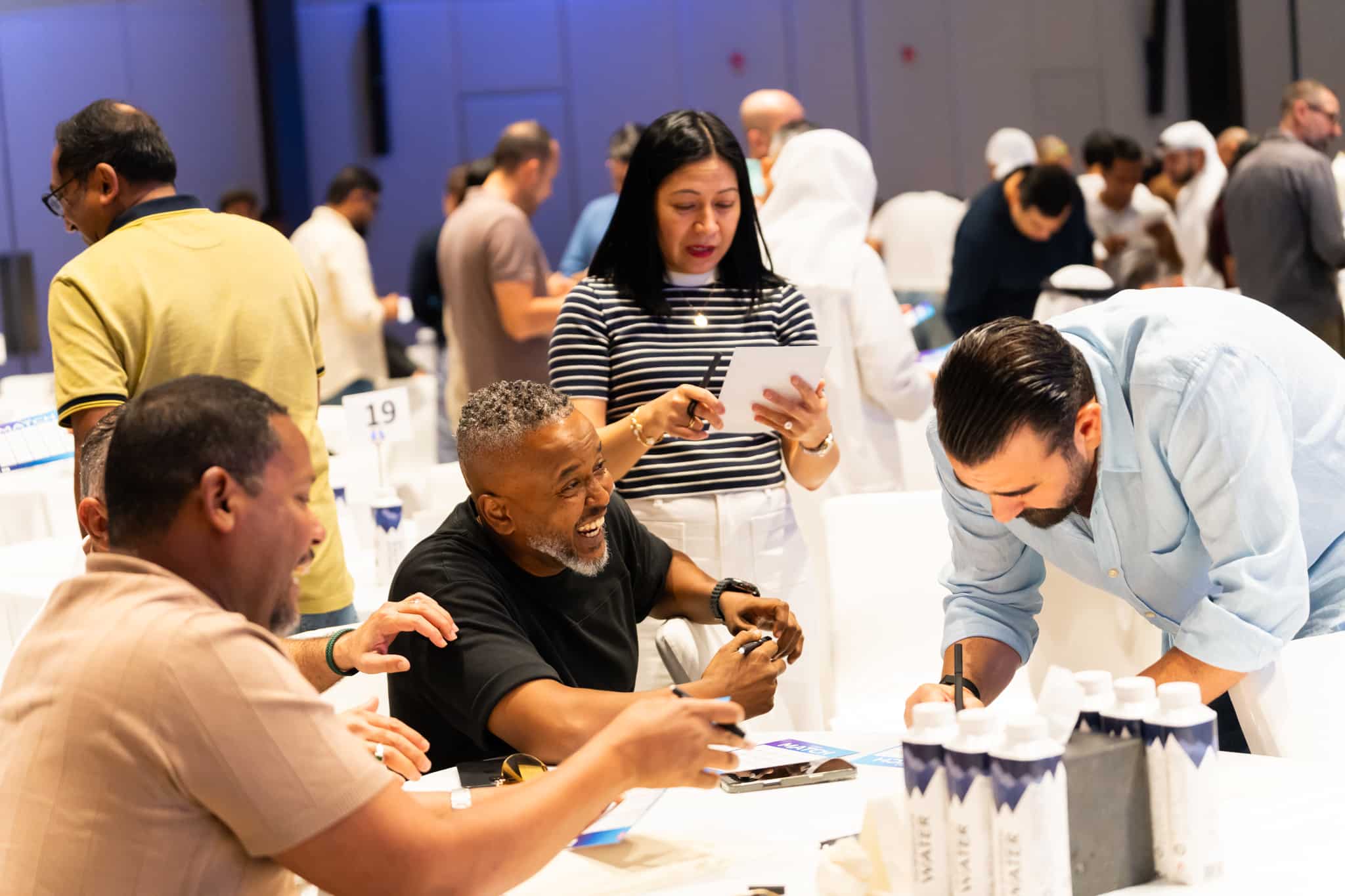
- The Rush-A-Way Challenge app for real-time engagement and scoring.
- An optional structured debrief linking insights to workplace behaviours, plus a post-event summary for the People or L&D team.
Most executive groups sit between 6 and 25 participants, and programmes are fully customisable to small and mid-sized leadership teams.
Workshops, Challenges, or Both?
Leadership skills such as self-awareness, emotional intelligence, change agility and clear communication develop through practice, not lectures. Rush-A-Way’s leadership team workshops blend framework, facilitated discussion and applied scenarios. The most requested for executive groups are:
- DISC Personality Assessment & Team Dynamics – working styles, conflict and trust.
- Emotional Intelligence (EQ) in the Workplace – stronger leadership presence and emotional agility.
- Navigating Change & Change Management – leading the organisation through transition.
- AI in the Workplace – accessible tools that improve decision-making and efficiency.
The strongest results come from pairing a workshop with a challenge on the same day: the workshop builds the framework and the challenge forces application under pressure. For a side-by-side view, see leadership workshops vs outdoor team challenges. Where the core issue is friction between executives, our guide to conflict resolution team building explains how DISC and structured debriefs help.
Choosing the Right Format: Session, Offsite or Retreat
| Format | Best for | Typical structure |
| Focused session (2 hours) | A single issue, e.g. decision rights after a reshuffle | One workshop or one challenge with debrief |
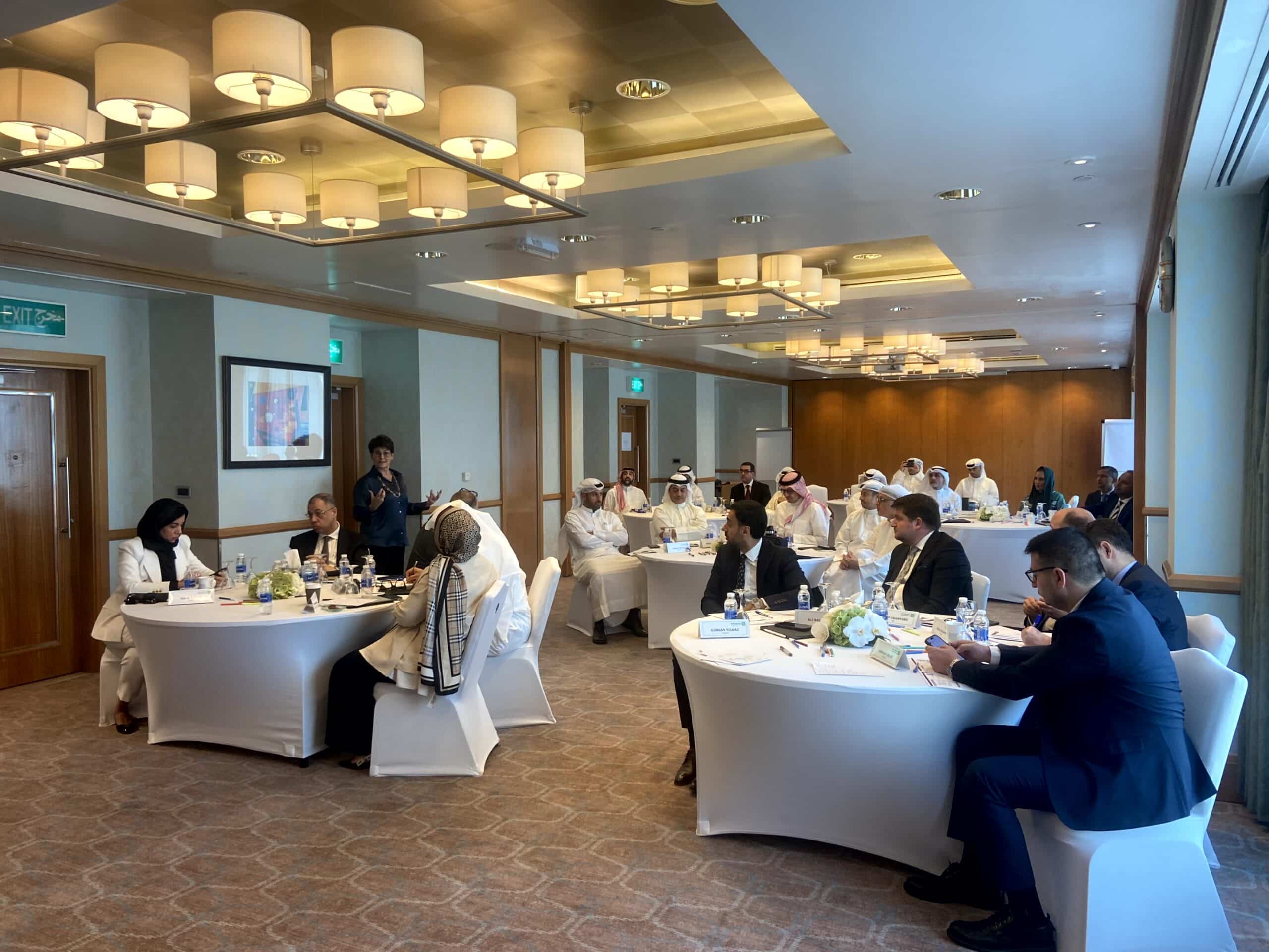
| Full-day offsite | Strategy alignment, a new executive team | Workshop in the morning, challenge in the afternoon, debrief |
| Multi-day leadership retreat | Post-merger integration, annual reset | DISC, EQ, change management, strategy alignment and high-trust experiences |
Sessions run at client offices or five-star venues across Dubai, Abu Dhabi, Sharjah and KSA. For extended formats, explore team building retreats or our pick of the best team building retreats in Dubai. Abu Dhabi venue partners and case studies are on our team building in Abu Dhabi page.
From Leadership Team to Leadership Pipeline
Once the top team is aligned, the same principles extend downward. Rush-A-Way’s leadership development training maps formats to each level: Discover My Superpowers for emerging leaders, the Rush-A-Way Challenge with a Communication or DISC workshop for first-line supervisors, and strategic build challenges such as Pyramid Build and Straw-gile with an EQ or Change Management workshop for mid-level managers.
For programmes built around defined capability outcomes across the whole organisation, see our learning-based team building approach.
Frequently Asked Questions
What makes team building for leadership teams different from regular team building?
Leadership programmes use facilitators experienced with C-suite dynamics, protect confidentiality, go deeper in content and link debriefs to strategic and organisational outcomes rather than general team bonding.
What is the ideal group size for a leadership team building session?
Most executive groups sit between 6 and 25 participants. Rush-A-Way programmes are fully customisable to small and mid-sized leadership teams.
How long is a leadership team workshop?
Workshops run from 2 hours to a full day. Multi-day formats are available for leadership retreats or multi-topic programmes.
Can leadership workshops be combined with team building?
Yes. Most leadership clients pair a trainer-led workshop such as DISC, EQ or Change Management with a Rush-A-Way Challenge on the same day.
Can the session run at our own venue or hotel?
Yes. Rush-A-Way delivers at five-star venues across Dubai, Abu Dhabi, Sharjah and KSA, as well as at client offices.
Are leadership workshops available virtually?
Yes. Workshops are delivered on-site across the UAE and KSA, fully virtual worldwide, and hybrid for distributed leadership teams.
Plan Your Next Step
Recognised three or more of the signs? Talk to Rush-A-Way about a leadership team programme designed around your executive group’s priorities, from a 2-hour focused session to a multi-day leadership retreat.